What happens when we begin to see the people who disagree with us not simply as mistaken, but as dangerous, evil, or even demonic? And how do religious ideas about spiritual evil shape the ways we understand those we see as our opponents?
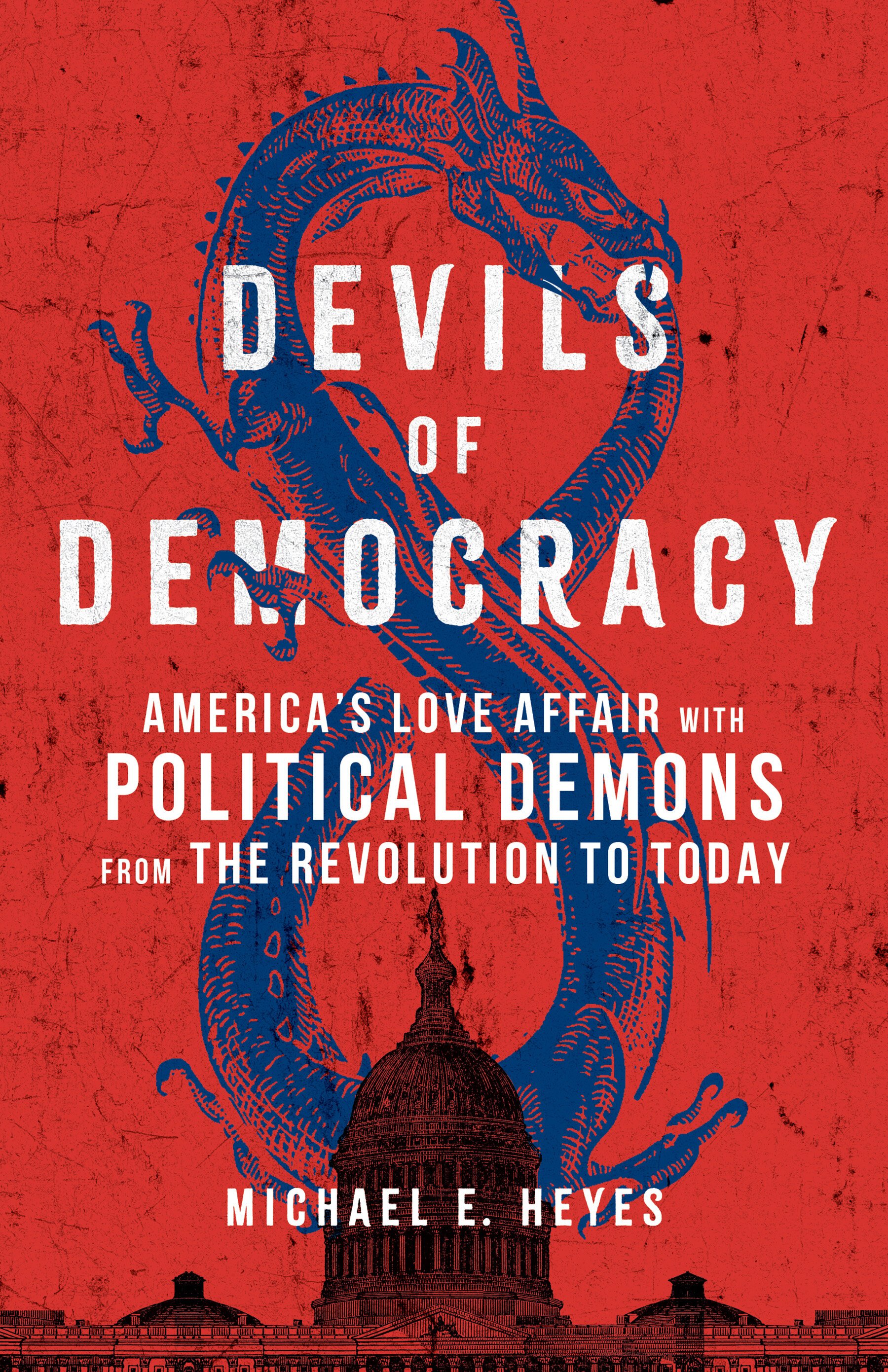
In this episode of Rector’s Cupboard, we’re joined by Michael E. Heyes, Associate Professor and Chair of the Department of Religion at Lycoming College, to discuss his book Devils of Democracy: America’s Love Affair with Political Demons from the Revolution to Today.
Michael traces the history of demonology in American religious and political life, showing how ideas about Satan, spiritual warfare, possession, and the apocalypse have developed and influenced the ways people understand their political opponents. From nineteenth-century spiritualism and its critics to the rise of contemporary Christian nationalism, he reveals some surprising connections and shows how beliefs that might seem fringe have found their way into mainstream religious culture.
Although Michael’s historical focus is the United States, the patterns he describes reach well beyond American politics. The impulse to cast those we disagree with as evil, to see our own side as uniquely righteous, and to turn differences into battles between good and evil can take root in many places and contexts. The conversation invites us to consider how these ideas shape our own ways of seeing the world and one another.
Michael also explores why these beliefs can be so compelling, particularly for people who feel they have lost their voice or agency. But his argument is ultimately hopeful. The challenge, he suggests, is not to defeat the people we disagree with, but to challenge the ideas that divide us. That means resisting the economy of rage, restoring a sense of agency, and making room for genuine conversations between human beings, even when we leave the table without agreeing.
What might change if we could resist the urge to make enemies of one another, and instead find ways to recognize the humanity of the other?
We hope you enjoy the conversation.
You can check out Michael's Substack here.