
What happens when the music we sing in worship begins to shape not only what we believe about God, but how we understand power, authority, and our neighbours? And what if the songs that bring us together are also reinforcing hierarchies and divisions that the gospel calls us to challenge?
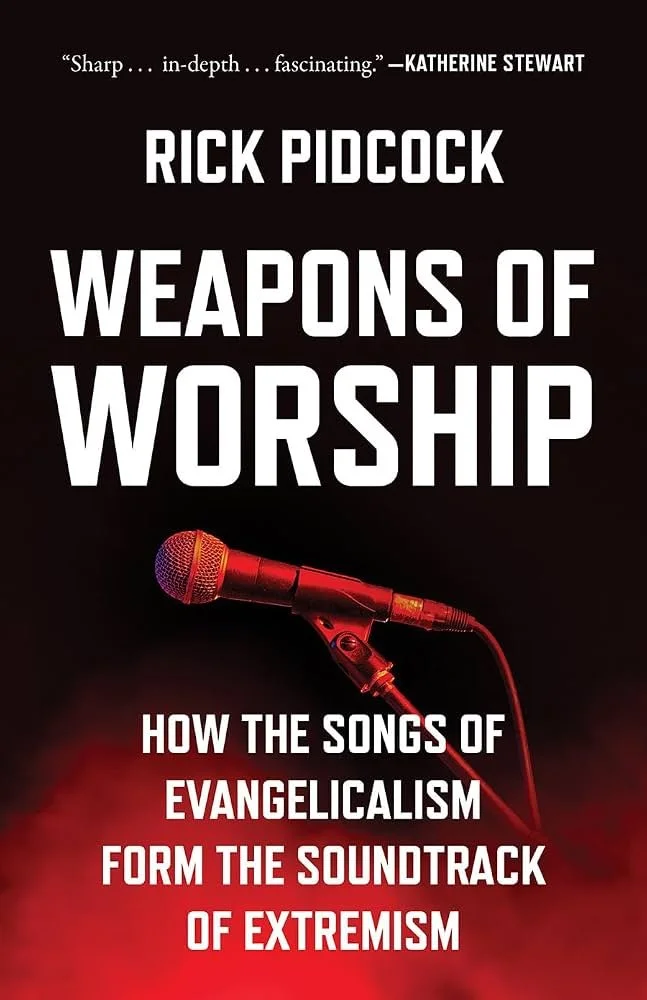
In this episode of Rector’s Cupboard, we’re joined by Rick Pidcock, journalist, former worship leader of twenty years, and author of Weapons of Worship: How the Songs of Evangelicalism Form the Soundtrack of Extremism.
Drawing on his experience in the contemporary worship industry, Rick explores how worship music is never quite as politically neutral as it might seem. He traces its language back to ancient empires, asking whether we are singing the soundtrack of empire—with its emphasis on conquest, power, and submission—or the songs of those living on its underside, whose music speaks of liberation, healing, and hope.
The conversation examines how music can shape our emotions and make us more receptive to political messages, often without our realizing it. Rick also considers the influence of a small number of powerful worship ministries and the ways songs can reinforce racial and gender hierarchies. Although much of his research focuses on the United States, these songs and their influence are familiar well beyond its borders.
But this isn't simply a critique of worship music. Drawing on the music of Black Christians who used worship to process the wounds of slavery, Rick points toward a practice rooted in lament, healing, and a deeper awareness of our neighbours. What if, instead of using worship as a weapon against others, we could turn our praise into ploughshares?
We hope you enjoy the conversation.
References:
Rick’s podcast with Baptist News Global, Highest Power: Church + State
Rick’s Substack, Exiles in Christendom